


Clay Pipe vs. PVC: Why Maryland Homeowners Are Replacing Their Sewer Lines Sooner Than Expected
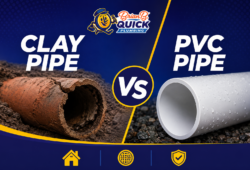
If your home was built before 1980, there is a good chance the sewer line running from your house to the street is made of clay. For decades, clay was the standard material for underground sewer pipes across the Mid-Atlantic. It held up reasonably well for a generation or two. But now, those same pipes are aging out, and homeowners across Montgomery County, Prince George’s County, and Baltimore are discovering the hard way that clay does not last forever.
Understanding why so many Maryland homeowners are making the switch to PVC, and what the signs of failure look like, can save you from a much bigger problem down the road.
Why Clay Pipes Were Used in the First Place
Clay tile and vitrified clay pipe were the go-to materials for residential sewer lines throughout most of the 20th century. They were abundant, relatively affordable, and did not corrode the way metal pipes could. Builders across the DC and Baltimore metro areas used them extensively from the 1920s through the late 1970s.
The problem is not that clay is a bad material. It is that clay pipes installed 50, 60, or 70 years ago were not designed with today’s tree canopy, soil shifting, or household water usage in mind. Many neighborhoods in Silver Spring, Bethesda, Towson, and Bowie now have mature trees whose root systems are actively searching for moisture, and older clay pipes give them exactly the kind of access point they are looking for.
How Clay Pipes Fail
Clay sewer lines do not usually fail all at once. The process is gradual, which is part of what makes it so easy to miss until significant damage has already occurred.
Joint separation is one of the most common problems. Clay pipes were not laid as single continuous runs. They were installed in shorter segments that fit together at joints. Over time, ground movement, frost cycles, and soil settling cause those joints to shift apart. Once a joint separates even slightly, tree roots can penetrate, sediment can enter, and sewage can begin leaching into the surrounding soil.
Root infiltration is the other major culprit. Tree roots are drawn to the warmth and moisture of an active sewer line. Once a root finds a small crack or open joint in a clay pipe, it grows inside the pipe, eventually forming a dense mass that blocks flow and can crack the pipe from the inside out. If you have mature trees anywhere near your sewer line, this is a risk worth taking seriously.
Deterioration and cracking happens to clay pipes simply because of age. The material becomes more brittle over time, especially when exposed to repeated freeze-thaw cycles. A pipe that looked fine during a video inspection five years ago may look very different today.
Why PVC Holds Up Better
Modern PVC sewer pipe is a significant improvement over clay in almost every respect. It is installed in longer sections, which means fewer joints and fewer potential entry points for roots. The material is flexible enough to absorb minor ground movement without cracking. It is also smooth on the inside, which reduces the buildup of grease, sediment, and debris that can cause clogs over time.
PVC is not indestructible, but it has an expected lifespan of 100 years or more under normal conditions. Homeowners who upgrade from clay to PVC are essentially setting up the next generation of their household to never have to think about the sewer line again.
The Signs Your Clay Pipe May Be Failing
The tricky thing about sewer line problems is that the actual pipe is buried underground. By the time you notice symptoms inside the house, the damage is often already significant. Here are the warning signs to watch for:
Slow drains throughout the house. If just one drain is slow, it is probably a localized clog. But if multiple fixtures, your toilets, sinks, and tubs are all draining slowly at the same time, that points to a problem further down the main sewer line.
Recurring clogs that keep coming back. If your main line is being cleared every year or two and the problem keeps returning, you are likely dealing with root intrusion or pipe damage that clearing alone cannot fix.
Sewage odors in or around your home. A functioning sewer line is a closed system. If you are smelling sewage in your yard, basement, or near floor drains, it may indicate that sewage is escaping through cracks or separated joints.
Unusually green or soggy patches in the yard. A leaking sewer line acts as fertilizer. If you notice a section of your lawn that is noticeably greener, softer, or wetter than the surrounding area without any obvious explanation, it is worth investigating.
A sinkhole or depression forming in the yard. This is a more serious sign. If the ground above or near your sewer line is sinking, it could indicate that a pipe has collapsed and the surrounding soil is falling into it.
The Value of a Video Inspection Before You Decide Anything
One of the most useful things a homeowner can do if they suspect sewer line trouble is schedule a sewer video camera inspection. A licensed plumber runs a small camera through the line and can see exactly what is happening inside the pipe, whether that is root intrusion, cracks, joint separation, or buildup. It takes the guesswork out of the process entirely.
This is especially important before buying an older home. A sewer scope during a home inspection can reveal problems that a standard inspection will never catch, and it can give you significant negotiating leverage or help you plan for a replacement before it becomes an emergency.
When Repair Is Enough vs. When You Need a Full Replacement
Not every problem with a clay sewer line requires full replacement. If the damage is isolated to a specific section and the rest of the pipe is in good condition, a targeted repair may be a reasonable option. Trenchless methods in particular have made it possible to address localized issues without tearing up your yard. Trenchless sewer repair can line or rehabilitate a damaged section of pipe from the inside, which is a much less disruptive process than traditional excavation.
That said, there are situations where a full replacement is the smarter long-term investment. If the pipe has multiple areas of damage, if joints are separating along much of the line’s length, or if root intrusion is extensive, patching one section only delays the next failure. A licensed plumber can help you evaluate what the camera inspection shows and give you an honest assessment of whether repair or full replacement makes more financial sense for your specific situation.
What a Full Sewer Line Replacement Involves
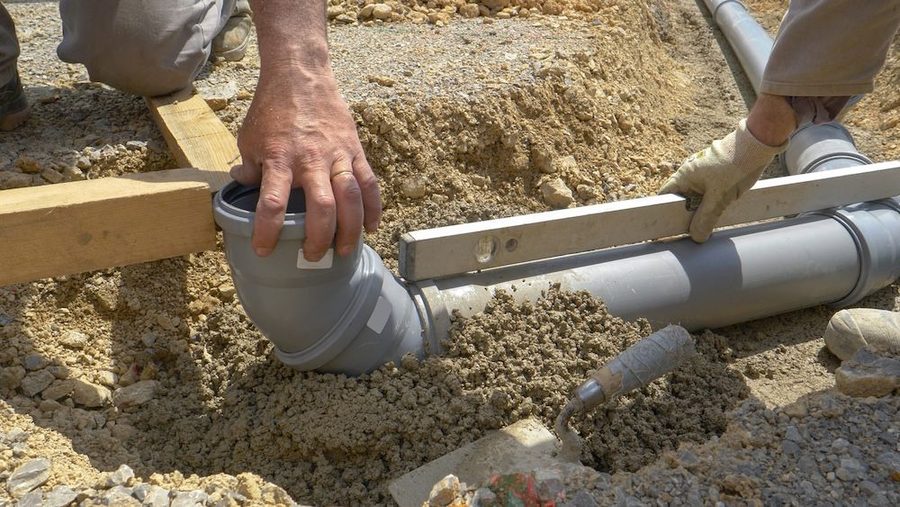
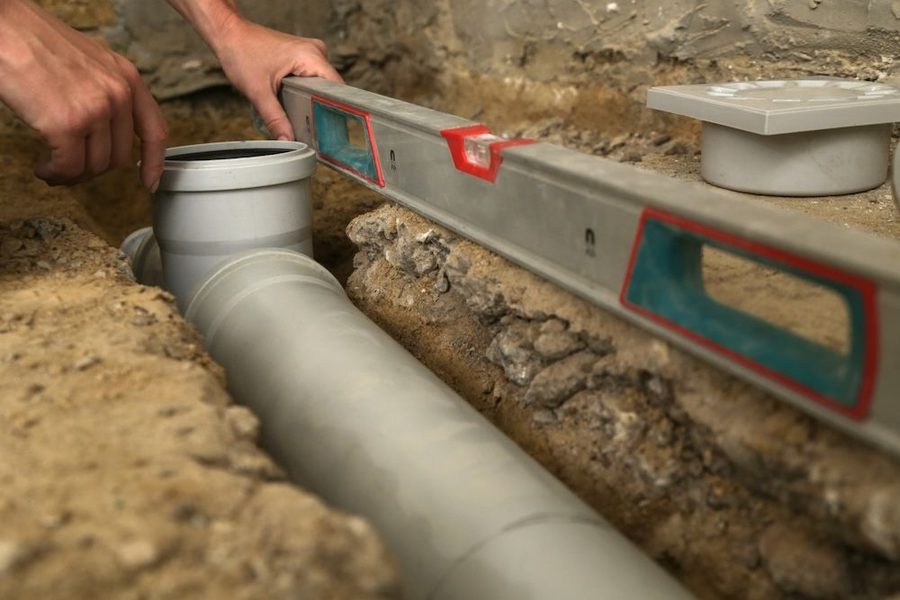
If your inspection shows that replacement is the right path, the process is more straightforward than most homeowners expect. Sewer line replacement involves removing the old clay pipe and installing a new PVC line from the home’s foundation to the connection point at the street or municipal sewer. The scope of the project depends on the length of the run, the depth of the pipe, and whether the work can be done trenchlessly or requires open excavation.
In Maryland and DC, most municipalities require a permit for sewer line replacement, and the work needs to be performed by a licensed plumber. Hiring a properly licensed contractor ensures the work is done to code and protects you if questions come up during a future home sale.
How to Think About the Cost
Sewer line replacement is not a small expense, but it is one of the more predictable major home repairs in terms of what you get for your money. Unlike a roof or an HVAC system where the costs keep recurring, a properly installed PVC sewer line is essentially a one-time investment for the life of your home.
Many homeowners who have dealt with recurring drain cleaning bills, emergency snake calls, and one slow-drain situation after another find that the math actually favors replacement sooner rather than later. Add the peace of mind of not having a sewage backup risk hanging over every heavy rain, and the value becomes clearer.
If you are seeing any of the warning signs described above, or if you simply have an older home and have never had the line inspected, it is worth finding out what you are working with before a problem forces the decision on you.
Brian B. Quick serves homeowners throughout Montgomery County, Prince George’s County, Baltimore County, and Washington, DC. Call or schedule service online to get a free estimate.

Excellent Plumbing Maintenance


Recent Posts
Contact Us
for Your Home Improvement Needs
Contact Us
Why Choose Brian B. Quick?
We Provide Excellent Customer Service and High-Quality Products for Lasting Results
- Family-owned and operated
- 4th Generation Master Plumbers
- Licensed and certified
- Upfront and fair pricing
- Open 24/7
- No travel or overtime fees
- Recognized by BBB, Angi, and PHCC


Serving the Washington Metropolitan Area: Gaithersburg, Germantown, Rockville, Potomac, Beltsville, Silver Spring, Washington DC, Bowie, and more!
Serving the Baltimore Metropolitan Area: Baltimore, Ellicott City, Glen Burnie, Columbia, Towson, Dundalk, Pikesville, Middle River, Odenton, and more!